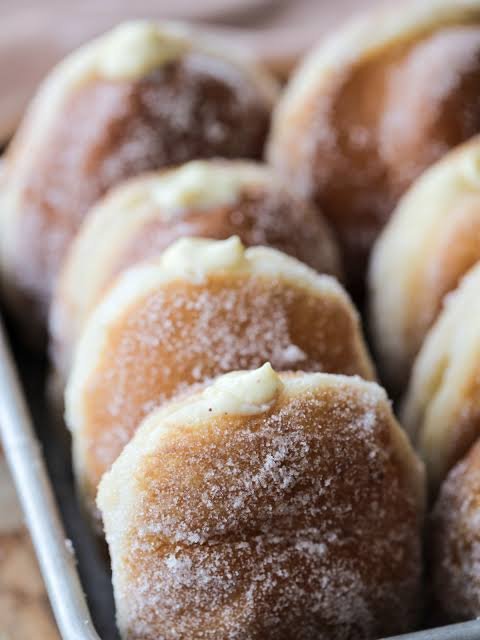
If you have ever baked sourdough bread at home, you know how much leftover starter discard builds up in your refrigerator over time. Throwing away that precious starter feels like a huge waste of food and time, but finding fun new ways to use it can sometimes feel tricky. These sourdough discard vanilla custard filled donuts are the ultimate solution for every home baker looking to transform leftover starter into a heavenly sweet treat. This recipe combines the light and fluffy texture of classic fried donuts with the rich, velvety smooth goodness of homemade vanilla bean custard. The subtle tang from your sourdough discard balances the natural sweetness of the sugary crust and creamy filling, making every single bite pure perfection for your taste buds.
People all over the world fall deeply in love with this recipe because it brings the feel of an authentic artisan bakery right into your home kitchen. Homemade donuts often have a reputation for being overly sweet or heavy, but the addition of sourdough discard completely changes the texture and profile of the dough. The fermenting bacteria in the discard work wonders by breaking down starches, creating a soft, pillowy interior that holds its structure while melting in your mouth. Furthermore, making your own vanilla custard from scratch provides a clean, rich flavor that store bought alternatives or artificial puddings simply cannot match. Once you share a batch of these golden brown pastries with your friends and family, they will beg you to make them for every weekend gathering.
There are so many wonderful reasons and special occasions to step into the kitchen and prepare these soft filled donuts. On a slow weekend morning, baking this sweet comfort food can fill your home with the warm, cozy aromas of sweet vanilla, warm flour, and fried dough. From a wellness perspective, long fermented dough made with sourdough discard is much easier on the human stomach than quick yeast doughs, allowing you to enjoy a festive treat without feeling overly bloated. Emotionally, the hands on process of kneading dough, watching it rise, and piping rich creamy custard into freshly cooked donuts brings immense joy, mindfulness, and satisfaction. It serves as a wonderful baking project for family bonding, festive celebrations, morning coffee breaks, or simply pampering yourself after a long week.
Starting your journey into artisan pastry making does not need to feel intimidating or overwhelming, even if you are an absolute beginner in the kitchen. This step by step recipe breaks down every single movement into clear, simple instructions so that anyone can achieve bakery quality results on their very first try. You will learn how to make a luscious homemade vanilla custard, prepare a silky smooth donut dough using your leftover starter, fry them to golden brown perfection, and assemble them like a professional pastry chef. Get ready to impress your loved ones and transform your humble kitchen leftovers into the most luxurious dessert imaginable.
Ingredients You Will Need
For the Sourdough Donut Dough
- 2 cups or 240 grams of all purpose flour
- 1 cup or 120 grams of bread flour
- 1 half cup or 120 grams of sourdough discard at room temperature
- 1 half cup or 120 milliliters of whole milk lukewarm
- 1 third cup or 65 grams of granulated white sugar
- 1 quarter cup or 55 grams of unsalted butter softened
- 2 large egg yolks at room temperature
- 1 teaspoon or 5 grams of instant yeast
- 1 teaspoon or 5 grams of pure vanilla extract
- 1 half teaspoon or 3 grams of fine sea salt
- Vegetable oil or canola oil for deep frying
For the Homemade Vanilla Custard Filling
- 2 cups or 480 milliliters of whole milk
- 1 half cup or 100 grams of granulated white sugar
- 1 quarter cup or 30 grams of cornstarch
- 4 large egg yolks
- 2 tablespoons or 28 grams of unsalted butter
- 2 teaspoons or 10 milliliters of pure vanilla extract or vanilla bean paste
- 1 pinch of fine sea salt
For the Outer Sugar Coating
- 1 cup or 200 grams of granulated white sugar
- 1 teaspoon or 2 grams of ground cinnamon optional
Step by Step Method
Step 1 Prepare the Creamy Vanilla Custard
- Pour two cups of whole milk into a medium saucepan and set it over medium heat until it starts to simmer gently along the edges.
- While the milk warms up, add four egg yolks, half a cup of granulated white sugar, a quarter cup of cornstarch, and a pinch of salt into a heatproof mixing bowl.
- Whisk the egg mixture vigorously until it becomes smooth, thick, and pale yellow in color.
- Slowly pour a small stream of the warm milk into the egg mixture while whisking constantly so the eggs do not cook or scramble.
- Once half of the warm milk is mixed in, pour the entire egg liquid back into the saucepan with the remaining hot milk.
- Cook the mixture over medium low heat while whisking constantly without stopping until it becomes thick and bubbly like pudding.
- Remove the saucepan from the heat, then stir in two tablespoons of unsalted butter and two teaspoons of vanilla extract until completely melted and smooth.
- Strain the warm custard through a fine mesh strainer into a clean bowl to remove any small lumps.
- Press a piece of plastic wrap directly onto the surface of the warm custard so a thick skin does not form on top.
- Place the custard into the refrigerator for at least two to three hours until it cools down completely and sets firm.
Step 2 Mix and Knead the Donut Dough
- In a large bowl or stand mixer bowl, combine lukewarm whole milk, instant yeast, and one tablespoon of sugar, then let it sit for five minutes until tiny bubbles form.
- Add your sourdough discard, room temperature egg yolks, remaining white sugar, and vanilla extract into the yeast mixture, then whisk well.
- Add the all purpose flour, bread flour, and fine sea salt into the bowl, then stir with a wooden spoon until a shaggy dough forms.
- Attach the dough hook to your mixer or use your hands to knead the dough on a lightly floured surface for five minutes.
- Gradually add the softened unsalted butter one small piece at a time while continuing to knead until the butter completely disappears into the dough.
- Knead the dough for another five to seven minutes until it becomes smooth, elastic, and slightly sticky to the touch.
Step 3 First Rise and Fermentation
- Shape the smooth dough into a neat round ball using your hands.
- Grease a large clean bowl with a light coating of vegetable oil.
- Place the dough ball into the greased bowl and turn it over once so the top is coated with oil.
- Cover the bowl tightly with plastic wrap or a clean damp kitchen towel.
- Place the bowl in a warm place in your kitchen for about two hours or until the dough grows double in size.
Step 4 Roll and Cut the Donuts
- Lightly dust your kitchen counter with a little bit of all purpose flour.
- Gently punch down the puffy dough to release excess air bubbles.
- Turn the dough out onto your counter and roll it out with a rolling pin until it is about half an inch thick everywhere.
- Line a large baking sheet with parchment paper and dust it lightly with flour.
- Use a round three inch cookie cutter or glass rim to cut individual round dough circles out of the sheet.
- Gather the leftover dough scraps, roll them out again, and cut more circles until all dough is used.
- Place each dough circle onto your prepared parchment lined baking sheet leaving space between them.
- Cover the cut circles loosely with a light kitchen towel and let them rise for forty five minutes to one hour until puffy.
Step 5 Fry the Donuts to Golden Brown
- Fill a deep heavy pot or Dutch oven with two or three inches of vegetable oil.
- Heat the oil over medium heat until it reaches a steady temperature of 350 degrees Fahrenheit or 175 degrees Celsius.
- Carefully lower two or three puffy dough circles into the hot oil using a spatula so you do not crowd the pot.
- Fry the donuts for two minutes on the first side until deep golden brown.
- Flip the donuts over using wooden chopsticks or tongs and fry for another two minutes on the second side.
- Remove the cooked donuts from the oil with a slotted spoon and place them on a paper towel lined plate to drain excess oil.
- Repeat the frying process with the remaining dough circles while maintaining your oil temperature.
Step 6 Sugar Coating and Custard Filling
- Place your granulated sugar mixed with optional cinnamon into a shallow bowl.
- While the fried donuts are still warm, toss each donut in the sugar mixture until fully coated on both sides.
- Allow the sugared donuts to cool down completely on a wire rack before filling them.
- Take your chilled vanilla custard out of the refrigerator and stir it gently with a spoon to make it smooth again.
- Scoop the custard into a piping bag fitted with a medium round metal piping tip.
- Use a small sharp knife or chopstick to poke a hole into the side of each cooled donut, creating a pocket inside.
- Insert the piping tip into the side hole and gently squeeze the bag until the donut feels heavy and custard fills the center.
- Serve immediately and enjoy your delicious fresh sourdough discard vanilla custard filled donuts.
Why This Recipe Is Special
This unique donut recipe stands out from ordinary quick bakery recipes for many amazing reasons. The primary secret behind its exceptional flavor is the introduction of sourdough discard into the dough mixture. Even though the sourdough discard is unfed, it carries depth, natural wild acids, and complex aromatic compounds created during fermentation. This soft sourness works in total harmony with the sweet vanilla cream, balancing out heavy sugars so you can enjoy a full donut without feeling overwhelmed by sweetness.
From a health and digestional standpoint, sourdough discard adds great functional value to homemade baked goods. The long fermentation phase helps break down gluten proteins and phytic acid within the wheat flour. As a result, your digestive system can absorb minerals much easier, and many people who suffer from mild wheat sensitivity find sourdough based pastries far easier to digest. Cooking from scratch also allows you to avoid artificial preservatives, synthetic dyes, hydrogenated trans fats, and chemical flavorings often found in commercial shop donuts.
Furthermore, this recipe offers incredible texturally satisfying results that contrast crispy, soft, and creamy elements. The quick deep frying creates a thin, delicate outer crust that holds a sparkling sugar coating. Right beneath that crispy shell lies a fluffy, pillow soft sourdough crumb that stays moist for hours. Finally, the center bursts with a velvety, homemade egg custard scented with real vanilla extract. The combination of simple ingredients transformed through traditional technique creates an unforgettable sweet treat.
Extra Tips for Better Taste
- Use real vanilla bean paste instead of plain vanilla extract in your custard to see beautiful tiny black vanilla specks and enjoy a deeper flavor.
- Maintain a steady oil temperature between 350 and 360 degrees Fahrenheit because cold oil makes donuts greasy while overly hot oil burns the outside before cooking the center.
- Keep your sourdough discard cold from the fridge if your kitchen is very warm, or bring it to room temperature if your house is chilly to control the rise time.
- Brown the unsalted butter in a small pan before adding it to your donut dough to introduce a rich, nutty caramel note.
- Toast a handful of sliced almonds or desiccated coconut and roll your freshly filled donuts in them along with sugar for an extra crunchy texture.
- Infuse the warm milk for your custard with citrus peels like orange or lemon zest before whisking into the egg yolks for a bright aromatic twist.
- If you want a lighter filling option, fold one cup of freshly whipped heavy cream into your chilled vanilla custard to create a silky diplomat cream center.
Final Thoughts
Baking at home should always feel like an enjoyable, rewarding journey rather than a stressful chore. These sourdough discard vanilla custard filled donuts turn simple kitchen leftovers into a spectacular dessert that rivals any high end bakery. By following these clear steps, taking your time with the dough rise, and cooking with love, you will create memorable treats that bring bright smiles to everyone around your table. Grab your starter discard, whip up some luscious custard, and treat yourself to the comforting delight of fresh homemade donuts today.
Nutrition Details
Here is the estimated nutritional breakdown for this recipe. Values are calculated per single filled donut based on a total yield of twelve standard donuts.
Nutritional Table Per Serving
| Nutrient | Amount Per Serving | Daily Value Percentage |
| Calories | 310 kcal | 15% |
| Total Fat | 13 grams | 17% |
| Saturated Fat | 6 grams | 30% |
| Trans Fat | 0 grams | 0% |
| Cholesterol | 95 milligrams | 32% |
| Sodium | 110 milligrams | 5% |
| Total Carbohydrates | 42 grams | 15% |
| Dietary Fiber | 1 gram | 4% |
| Total Sugars | 22 grams | 44% |
| Protein | 6 grams | 12% |
| Vitamin D | 0.6 micrograms | 3% |
| Calcium | 60 milligrams | 5% |
| Iron | 1.5 milligrams | 8% |
| Potassium | 120 milligrams | 3% |
Note that fried food nutritional values can vary slightly depending on exact oil absorption, frying temperature, and specific ingredient brands used in your kitchen.
Disclaimer
This recipe and its nutrition details are provided for informational and educational purposes only. Every individual body responds differently to foods based on personal metabolism, health conditions, allergies, and activity levels. Nutritional values provided here are estimates generated using standard ingredient databases and may change depending on exact portions or substitutions. Please consult with a qualified health professional or registered dietitian if you have specific dietary restrictions, medical concerns, or food allergies.