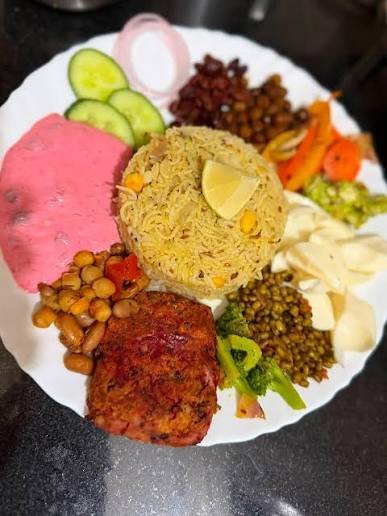
In today’s busy lifestyle, finding a meal that is filling, flavorful, colorful, and protein-rich can make healthy eating much easier. This beautiful High-Protein Power Plate is a great example of how you can bring different nutritious foods together on one plate without giving up flavor.
The plate shown above combines seasoned rice, beans, lentils, fresh vegetables, cucumber, yogurt-based sides, and a delicious savory protein item. The result is a satisfying meal inspired by South Asian flavors while fitting naturally into a modern healthy-food lifestyle.
Whether you are looking for a nutritious lunch, a wholesome dinner, a meal-prep idea, or simply a colorful plate that makes healthy eating more enjoyable, this combination offers plenty of inspiration.
What Is a High-Protein Power Plate?
A High-Protein Power Plate is a balanced meal built around protein-rich ingredients and accompanied by vegetables, healthy carbohydrates, and other nutrient-dense foods.
Instead of relying on just one ingredient, a power plate can combine several sources of protein. Beans, chickpeas, lentils, yogurt, eggs, chicken, fish, and lean meat are all popular choices.
The plate in the image has a particularly appealing variety of textures and colors. There is fluffy seasoned rice in the center, legumes on the sides, fresh cucumber, vegetables, a creamy pink-colored side, yogurt-based ingredients, and a flavorful savory patty or kebab.
This type of meal shows that healthy food does not have to look plain or boring.
Why Protein Is Important in a Healthy Diet
Protein is one of the three major macronutrients, along with carbohydrates and fat. It plays an important role in maintaining and repairing body tissues and is also involved in many biological processes.
Including a source of protein in a meal can also make the meal more satisfying.
However, the amount of protein a person needs depends on several factors, including age, body size, activity level, and overall dietary needs. For that reason, it is better to think of this plate as a protein-rich meal idea rather than assigning an exact protein amount without knowing the precise ingredients and quantities.
A Colorful Combination of Desi-Inspired Foods
One of the most attractive things about this plate is its variety.
The combination includes foods that are commonly enjoyed in South Asian cooking, but they can also fit into a modern balanced-meal approach.
The Plate Includes:
-
Seasoned rice
-
Chickpeas and beans
-
Green lentils or moong
-
A savory protein-rich patty or kebab
-
Cucumber slices
-
Mixed vegetables
-
Green vegetables
-
Yogurt or raita
-
Onion
-
Lemon
-
Colorful vegetable sides
The exact ingredients can be adjusted according to your taste and dietary preferences.
Seasoned Rice as the Base
At the center of the plate is a generous serving of seasoned rice. Rice is a popular staple around the world and is especially common in South Asian cuisine.
For a healthier everyday version, you can prepare rice with moderate amounts of oil and add vegetables, herbs, and spices for flavor.
You can also experiment with:
-
Brown rice
-
Basmati rice
-
Long-grain rice
-
Mixed vegetable rice
-
Whole-grain rice blends
The goal is not to completely eliminate carbohydrates. Instead, a balanced plate can include an appropriate portion of carbohydrates alongside protein and vegetables.
Beans and Chickpeas for Plant-Based Protein
The beans and chickpeas on this plate are an important part of its protein-rich character.
Chickpeas, kidney beans, black beans, and other legumes are versatile ingredients that can be used in salads, curries, bowls, and side dishes.
They also provide dietary fiber and can make a meal more filling.
For an easy meal-prep option, cooked chickpeas and beans can be seasoned with:
-
Cumin
-
Black pepper
-
Paprika
-
Garlic
-
Lemon juice
-
Coriander
-
A small amount of olive oil
This creates a simple but flavorful side dish.
Green Lentils and Moong: A Nutritious Addition
The green lentils or moong visible on the plate add another plant-based component.
Lentils are widely used in South Asian cooking and can be prepared in many different ways. A lightly seasoned lentil dish can be served alongside rice, vegetables, yogurt, or grilled protein.
Moong is especially versatile and can be used in:
-
Curries
-
Salads
-
Soups
-
Sprouts
-
Rice dishes
-
High-protein bowls
Combining different legumes is also a great way to add variety to your meals.
The Savory Protein Patty
The large savory patty on the plate adds another interesting element. It appears similar to a kebab, lentil patty, or vegetable-and-protein cutlet.
For a homemade version, you could create a protein-rich patty using ingredients such as lean minced meat, lentils, chickpeas, vegetables, herbs, and spices.
Depending on the recipe, it can be:
-
Grilled
-
Baked
-
Air-fried
-
Pan-cooked with minimal oil
Cooking method can significantly affect the overall calorie and fat content of a meal, so baked or grilled versions can be useful options for people trying to keep meals lighter.
Fresh Cucumber for Crunch and Freshness
The cucumber slices provide a refreshing contrast to the warm and spicy foods on the plate.
Cucumber is naturally high in water and works especially well with rich or spicy dishes.
You can turn simple cucumber slices into a quick salad by adding:
-
Lemon juice
-
Black pepper
-
Fresh mint
-
Coriander
-
A pinch of salt
It takes only a few minutes and adds freshness to the meal.
Colorful Vegetables Make the Plate More Appealing
A healthy plate does not have to be visually boring.
The colorful vegetables in this meal add different textures and flavors while making the plate look much more appetizing.
You can use vegetables such as:
-
Carrots
-
Bell peppers
-
Broccoli
-
Cabbage
-
Green beans
-
Spinach
-
Peas
-
Cauliflower
Using several colors is an easy way to make everyday meals more interesting.
Yogurt and Raita Add Creaminess
A yogurt-based side such as raita is a natural companion to many South Asian meals.
Plain yogurt can be mixed with cucumber, mint, coriander, cumin, or other seasonings to create a refreshing side dish.
For a simple healthy raita, combine:
Plain yogurt + cucumber + mint + roasted cumin + black pepper
Mix everything together and chill before serving.
If you’re watching your calorie intake, choosing plain or lower-fat yogurt and avoiding excessive added ingredients can help keep the dish lighter.
Lemon Makes Everything More Flavorful
The lemon wedge in the center of the plate may look like a small detail, but citrus can make a big difference in flavor.
Fresh lemon juice can brighten beans, vegetables, rice, and grilled proteins without requiring a large amount of sauce.
This is especially useful when you’re trying to create flavorful meals while keeping heavy sauces and excessive added fats under control.
How to Build Your Own High-Protein Power Plate
Creating your own power plate is surprisingly simple.
Start with one protein-rich main ingredient and then build around it.
Step 1: Choose Your Protein
Pick one or two options:
-
Grilled chicken
-
Fish
-
Eggs
-
Lean beef
-
Kebab
-
Chickpeas
-
Lentils
-
Beans
-
Greek yogurt
Step 2: Add a Smart Carb
Choose a moderate portion of:
-
Rice
-
Brown rice
-
Whole-grain roti
-
Quinoa
-
Potatoes
-
Whole grains
Step 3: Add Plenty of Vegetables
Use fresh or cooked vegetables for color, texture, and variety.
Step 4: Add a Healthy Side
A small serving of yogurt, raita, hummus, or a fresh salad can make the meal more satisfying.
Step 5: Finish With Flavor
Use lemon juice, herbs, spices, garlic, black pepper, or chili according to your preference.
High-Protein Meal Prep Idea
This type of platter can also be adapted for meal preparation.
Prepare your ingredients in advance and store them separately. Cook a batch of rice, legumes, vegetables, and your preferred protein. When you’re ready to eat, simply assemble everything on a plate or in a meal-prep container.
For example:
Container 1: Seasoned rice
Container 2: Chickpeas and beans
Container 3: Grilled protein patties
Container 4: Cooked vegetables
Container 5: Fresh cucumber and salad
Container 6: Yogurt or raita
This makes it easier to put together a nutritious meal during a busy weekday.
Is This a Good Meal for Weight Management?
A protein-rich meal can be part of a weight-management diet, but the overall diet and portion sizes matter.
Simply adding more protein does not automatically make a meal low-calorie or guarantee weight loss.
For a lighter version of this platter, you can:
-
Use less cooking oil
-
Choose grilled or baked protein
-
Increase the vegetable portion
-
Keep rice portions moderate
-
Choose plain yogurt
-
Limit heavy sauces
-
Use fresh herbs and lemon for flavor
Your overall calorie and nutrient needs depend on your individual circumstances.
High-Protein Vegetarian Version
You don’t need meat to create a protein-rich plate.
A vegetarian version can include:
-
Chickpeas
-
Kidney beans
-
Moong
-
Lentils
-
Greek yogurt
-
Cottage cheese
-
Tofu
-
Eggs, if included in your diet
A combination of legumes, dairy or other protein-rich foods, vegetables, and whole grains can create a satisfying vegetarian meal.
How to Make This Meal More American-Friendly
For a U.S. audience, you can present this meal as a High-Protein Power Plate, Protein-Packed Dinner Plate, or Healthy Protein Bowl.
Instead of describing it only as traditional South Asian food, highlight its familiar healthy-meal concepts:
Protein + Whole Grains + Legumes + Vegetables + Yogurt + Fresh Lemon
This makes the dish easy to understand while still celebrating its desi-inspired flavors.
Healthy Toppings and Flavor Ideas
If you want to change the flavor of your power plate, try different toppings.
Fresh Flavor
Use lemon, cilantro, mint, cucumber, and green onions.
Spicy Flavor
Add chili flakes, jalapeños, chili powder, or a spicy yogurt sauce.
Mediterranean-Inspired Flavor
Try hummus, parsley, cucumber, lemon, and a drizzle of olive oil.
Desi Flavor
Use cumin, coriander, garam masala, chaat masala, mint, and fresh lemon.
This makes the same basic meal feel completely different from one day to another.
A Balanced Meal Doesn’t Have to Be Boring
One of the biggest advantages of a colorful power plate is variety.
Instead of eating the same chicken-and-rice meal every day, you can combine different proteins, vegetables, grains, legumes, and sauces.
For example:
Monday: Chicken + rice + cucumber + yogurt
Tuesday: Chickpeas + lentils + vegetables + roti
Wednesday: Fish + rice + broccoli + raita
Thursday: Kebab + beans + salad + yogurt
Friday: Eggs + lentils + vegetables + whole-grain toast
This approach can make healthy eating more enjoyable and sustainable.